
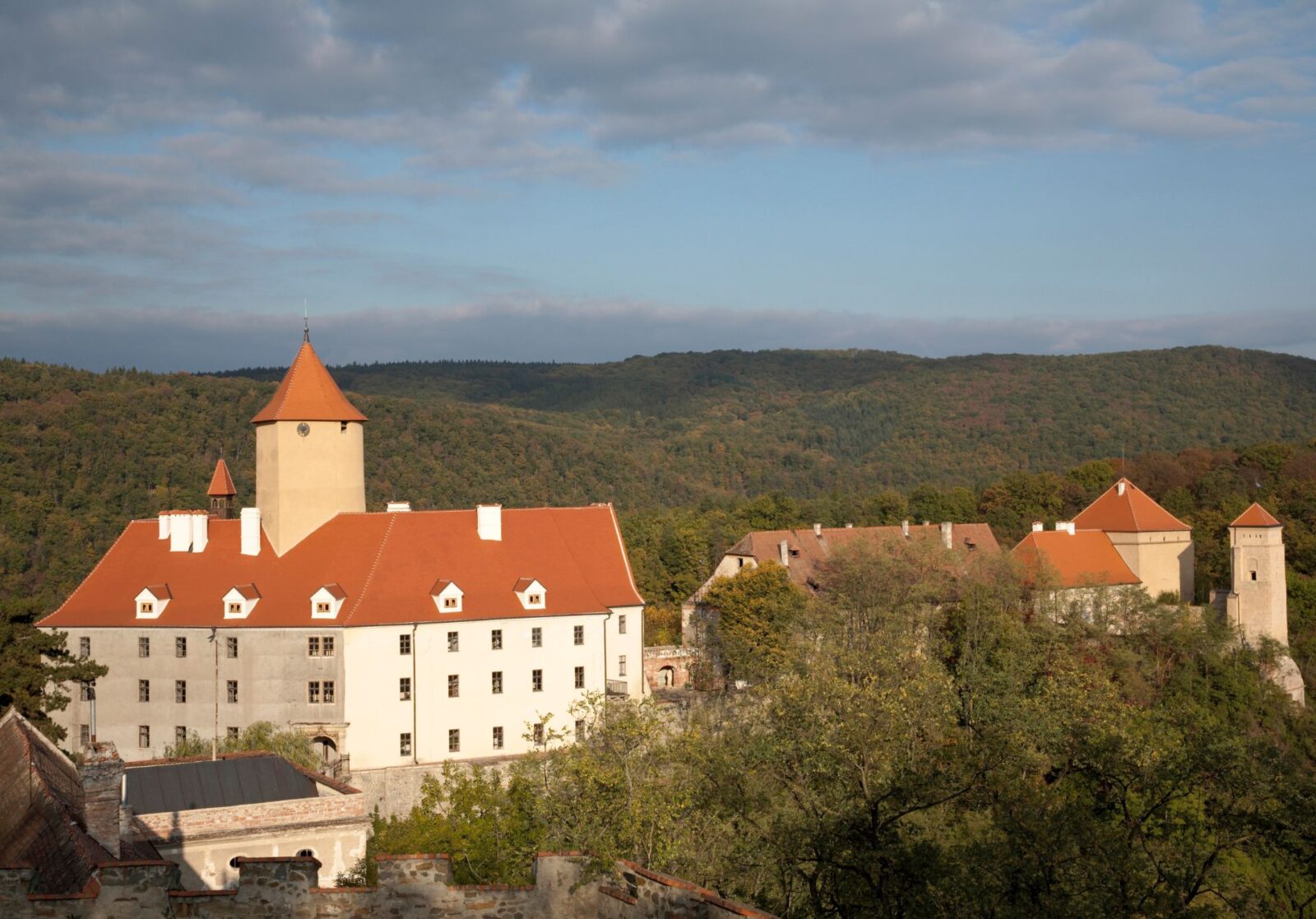
Špilberk Castle
Constructed in the mid-13th century (around 1277-1278) by Czech King Přemysl Otakar II, Špilberk Castle stands as one of the most significant historical monuments in Brno, Czech Republic. Originally designed as a royal castle and seat of Moravian margraves, the fortress sits atop a hill overlooking the historic city center, occupying an area of approximately 36,000 square meters.
Architectural Evolution
The castle’s architecture represents multiple historical periods, with significant modifications occurring in the 14th, 17th, and 18th centuries. The original Gothic structure was gradually transformed into a massive Baroque fortress, engineered to be one of the mightiest military strongholds of the Habsburg empire. The castle’s walls reach up to 2 meters in thickness, demonstrating the impressive medieval construction techniques used during its initial development.
Fortress Transformation
In the 17th and 18th centuries, extensive renovations transformed Špilberk into a monumental Baroque fortress. Swedish armies attempted to capture it twice during the Thirty Years’ War (1618-1648) but failed, proving the effectiveness of its defensive capabilities. The fortress was designed to accommodate up to 1,200 soldiers and housed 400 cannons at its peak military strength.
The Hardest Prison of the Nations
Perhaps the castle’s most notorious period began in the late 18th century when it was converted into a prison. From 1783 to 1858, Špilberk gained the reputation as the “Prison of Nations,” becoming one of the harshest prisons in the Austrian Empire. The prison cells, particularly the dreaded casemates, housed thousands of inmates, including political prisoners, French revolutionaries, Italian carbonari, and Hungarian jacobins.
The Casemates
The underground casemates, originally designed as storage spaces and shelter for soldiers, became infamous prison cells. These windowless chambers, maintaining a constant temperature of 13°C year-round, housed up to 200 prisoners at a time. Today, visitors can explore these preserved cells, which span approximately 1,000 square meters and represent one of the castle’s most popular attractions.
Military Significance
During Napoleon’s campaign in 1809, the French army occupied Špilberk and subsequently destroyed much of its defensive fortifications. Despite this, the castle maintained its military importance through World War II, when German forces used it as a storage facility and occasional prison. The castle’s strategic location provided commanding views over Brno, with visibility extending up to 15 kilometers on clear days.
Modern Cultural Center
Since 1960, Špilberk Castle has served as the home of the Brno City Museum, hosting numerous permanent and temporary exhibitions. The museum welcomes approximately 150,000 visitors annually. The castle complex includes several exhibition spaces totaling over 3,000 square meters, featuring collections ranging from Brno’s history to contemporary art installations.
Cultural Events and Tourism
Today, the castle hosts more than 100 cultural events annually, including the popular Summer Shakespeare Festival, which attracts over 5,000 spectators. The castle’s courtyard, capable of accommodating up to 1,000 people, serves as a venue for concerts, theatrical performances, and historical reenactments.
Restoration and Preservation
Recent restoration projects, including a major renovation completed in 2019 at the cost of 150 million Czech crowns (approximately €5.8 million), have focused on preserving the castle’s historical authenticity while improving visitor facilities. The restoration work uncovered several previously unknown medieval architectural elements and restored the castle’s baroque chapel to its original glory.
Archaeological Discoveries
Ongoing archaeological research has revealed over 10,000 artifacts dating from the 13th to 20th centuries. Notable findings include medieval weaponry, prisoner graffiti, and everyday items that provide insights into life at the castle throughout its various historical phases.
Špilberk Castle stands as a testament to nearly eight centuries of European history, evolving from a royal residence to a feared prison and finally to a celebrated cultural monument. Its transformation mirrors the broader historical changes in Central Europe, making it an invaluable historical resource. Today, as one of Brno’s premier tourist attractions and cultural venues, Špilberk continues to bridge the past and present, offering visitors a unique glimpse into European history while serving as a vibrant center for contemporary cultural life. The castle’s ongoing preservation efforts ensure that future generations will continue to learn from and be inspired by this remarkable historical monument.