
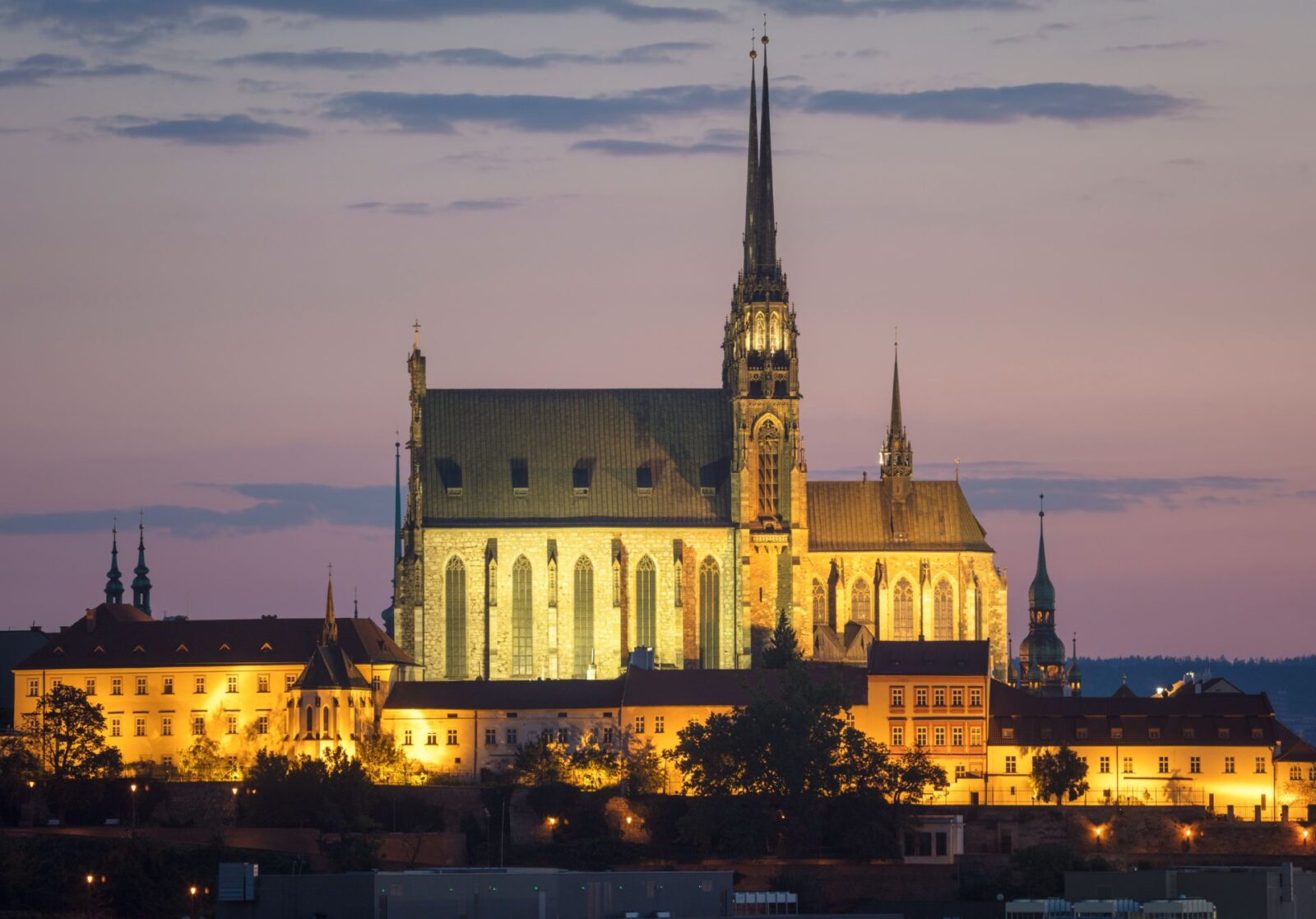
Cathedral of St. Peter and Paul
The Cathedral of Saints Peter and Paul, perched atop Petrov hill in Brno, Czech Republic, stands as one of the most significant architectural monuments in Central Europe. Originally founded in the 11th century as a Romanesque basilica, the cathedral has undergone numerous transformations throughout its nearly millennium-long history. The earliest written record of the church dates back to 1091, during the reign of King Vratislav I of Bohemia.
Architectural Evolution
The cathedral’s current neo-Gothic appearance emerged from major renovations between 1904 and 1909, led by prominent architects August Kirstein and Karl Welzl. The distinctive twin spires, reaching a height of 84 meters (276 feet), have become an unmistakable symbol of Brno’s skyline. The spires were constructed using innovative engineering techniques of the early 20th century, incorporating steel reinforcement within their stone structure.
Architectural Features
The cathedral showcases remarkable architectural elements, including: – A richly decorated main portal with Gothic revival sculptures – Intricate stained glass windows designed by Karel Svolinsky in 1976 – A baroque altar dating from 1891 – The original crypt containing remnants of the Romanesque basilica The interior spans 50 meters in length and reaches a height of 35 meters in the main nave.
Cultural Significance
As the seat of the Diocese of Brno since 1777, the cathedral holds immense religious and cultural importance. It serves not only as a spiritual center but also as a guardian of Brno’s unique traditions. One of the most famous traditions associated with the cathedral is the “Brno Noon” phenomenon, where the bells ring at 11:00 AM instead of noon, commemorating the city’s successful defense against Swedish forces in 1645.
Historical Treasures
The cathedral houses numerous valuable artifacts and artworks, including: – The 14th-century Baroque altar of the Virgin Mary – Medieval frescos discovered during restoration work in the 1990s – A collection of liturgical vessels dating back to the 17th century – The tomb of Bishop Theodoric, featuring unique Gothic sculptural decoration
Modern Conservation
Recent conservation efforts have focused on preserving the cathedral’s historical integrity while adapting to modern needs. Between 2015-2019, a comprehensive restoration project costing approximately 110 million Czech crowns ($5 million) was undertaken. This included: – Structural reinforcement of the spires – Restoration of the historic pipe organ – Installation of modern climate control systems – Conservation of medieval wall paintings
Tourism Impact
The cathedral attracts over 200,000 visitors annually, making it one of Brno’s most visited landmarks. The observation gallery in the western tower offers panoramic views of the city and remains particularly popular among tourists. Regular guided tours are conducted in multiple languages, providing insights into the cathedral’s architecture, history, and religious significance.
Religious and Community Role
Beyond its historical significance, the cathedral maintains an active role in community life. It hosts: – Regular religious services attracting approximately 1,000 worshippers weekly – Cultural events and concerts utilizing the cathedral’s exceptional acoustics – Educational programs for schools and youth groups – Special ceremonies during major religious festivals
Archaeological Discoveries
Recent archaeological excavations beneath the cathedral have revealed evidence of early medieval settlement dating back to the 9th century. These findings have provided valuable insights into Brno’s early Christian history and urban development. The discoveries include: – Foundations of the original Romanesque church – Medieval burial grounds – Artifacts from daily life in medieval Brno – Evidence of pre-Christian settlements
The Cathedral of Saints Peter and Paul stands as a testament to Brno’s rich historical and cultural heritage. Its evolution from a modest Romanesque basilica to the current neo-Gothic masterpiece mirrors the city’s own development through the centuries. The cathedral continues to serve as both a spiritual beacon and a cultural landmark, bridging Brno’s medieval past with its vibrant present. Through careful preservation and active community engagement, this architectural marvel ensures that future generations will continue to be inspired by its beauty and historical significance.