
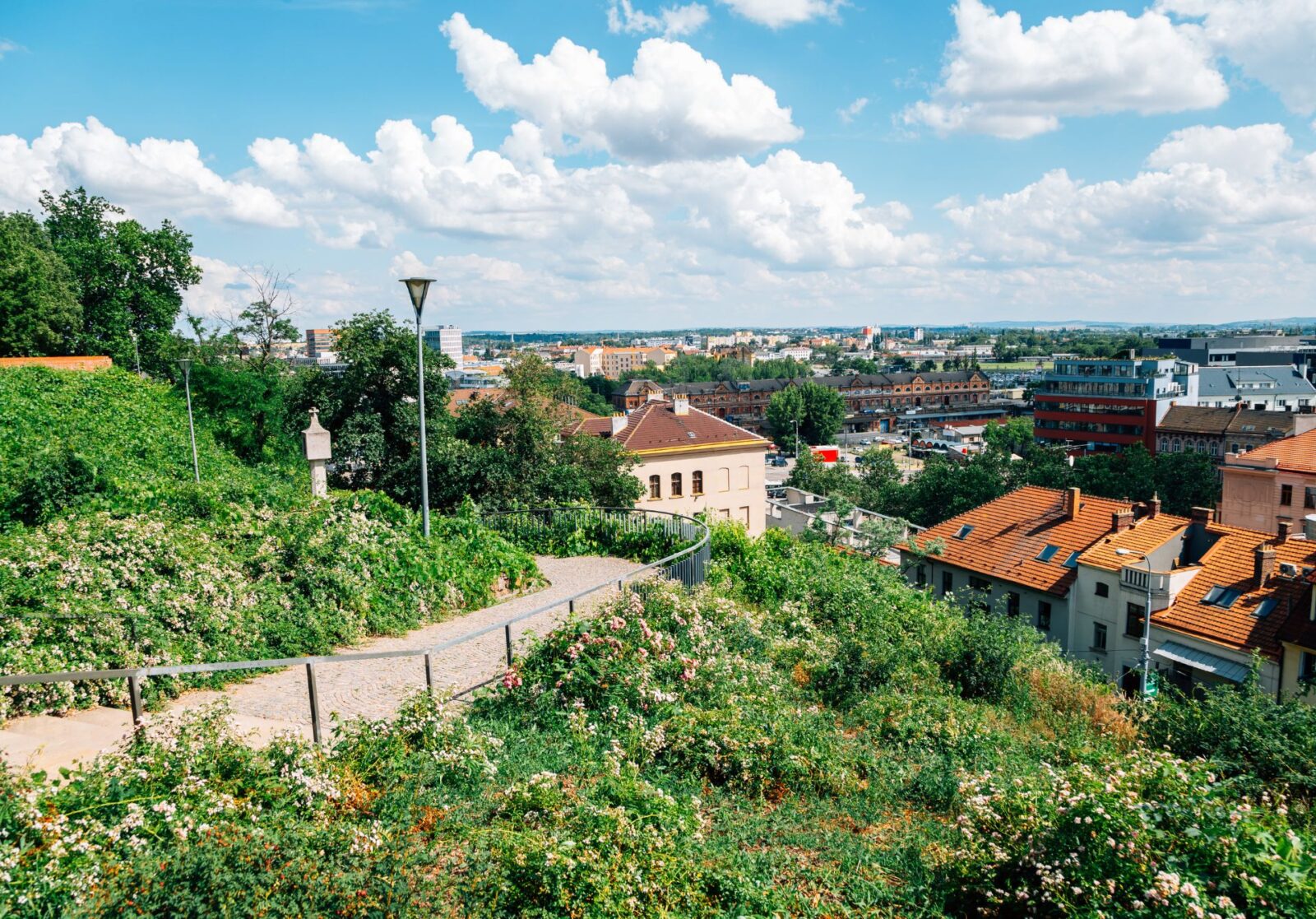
Denis Gardens
Denis Gardens (Denisovy sady in Czech) stands as one of Brno’s most historically significant parks, established in the early 19th century. Named after the French historian and bibliographer Jean-Pierre Denis, the gardens were created as part of the city’s modernization efforts following the Napoleonic Wars. The park’s development began in 1814 under the guidance of Heinrich Carl van der Schütt, who envisioned a space that would combine natural beauty with historical preservation.
Location and Architectural Features
Situated on the southern slope of Petrov Hill, Denis Gardens offers breathtaking views of Brno’s city center. The park’s strategic location adjacent to the Cathedral of Saints Peter and Paul makes it an integral part of Brno’s architectural landscape. The gardens span approximately 1.7 hectares, featuring a series of terraced levels that accommodate the hill’s natural topography.
One of the park’s most notable features is the Empire-style colonnade, constructed in 1818. This architectural masterpiece serves as both a viewing terrace and a monument to the end of the Napoleonic Wars. The colonnade’s classical design, with its distinctive columns and ornate decorations, reflects the prevailing architectural styles of the early 19th century.
Botanical Significance
The gardens showcase a diverse collection of plant species, carefully selected to thrive in the local climate while providing year-round visual interest. Notable specimens include:
- Ancient lime trees dating back to the garden’s establishment
- Ornamental flowerbeds featuring seasonal displays
- Native Czech plant species that support local biodiversity
Cultural Importance
Denis Gardens has played a crucial role in Brno’s cultural life for over two centuries. The park serves as a popular gathering spot for both locals and tourists, hosting various cultural events throughout the year. The gardens’ historical significance is enhanced by its proximity to other important landmarks, making it a key stop on many historical walking tours of Brno.
The park’s obelisk, erected in 1818, commemorates the end of the Napoleonic Wars and stands as a testament to Brno’s resilience through challenging historical periods. This monument, along with various sculptures and memorial plaques throughout the gardens, helps preserve and share the city’s rich history with visitors.
Modern Usage and Preservation
Today, Denis Gardens continues to serve multiple purposes in Brno’s urban landscape. The park functions as:
- A peaceful retreat for city residents
- An important tourist destination
- A venue for cultural and social events
- An educational resource for botanical studies
Conservation efforts are ongoing to preserve both the historical elements and natural features of the gardens. The city of Brno has implemented various restoration projects to maintain the park’s infrastructure while ensuring its historical integrity remains intact.
Denis Gardens represents more than just a public park; it stands as a living testament to Brno’s rich cultural heritage and architectural evolution. Its seamless blend of historical significance, natural beauty, and modern functionality makes it an invaluable asset to the city. As Brno continues to develop and change, Denis Gardens remains a constant reminder of the city’s commitment to preserving its historical spaces while adapting them for contemporary use.
Whether visiting for its historical significance, seeking a peaceful retreat, or simply enjoying the panoramic views of Brno, Denis Gardens offers something for everyone. Its continued preservation and celebration ensure that future generations will have the opportunity to experience this unique piece of Brno’s heritage.